
A fire can change the condition of an Anaheim home in minutes, but the damage rarely stops where the flames stopped. Heat may affect materials near the source, smoke and soot can travel into other rooms, and water from firefighters or sprinklers can soak flooring, drywall, cabinets, insulation, and personal belongings. Some of that damage is obvious. Other conditions remain hidden until someone follows the paths traveled by smoke and water.
For homeowners, those first days bring questions about cleanup, costs, belongings, insurance coverage, and the condition of the structure. Commercial property owners and managers face many of the same concerns while also thinking about tenants, employees, inventory, and business interruption.
Rytech Restoration of Orange County helps property owners and insurance professionals make sense of those conditions. The local team provides 24/7 emergency response, property damage inspection, fire damage restoration, smoke damage removal, odor removal, water damage restoration, packout and contents services, mold remediation, and commercial restoration. IICRC-certified technicians, daily job monitoring, insurance assistance, direct billing when applicable, and a restoration-first approach support the process from inspection forward.
Here are answers to the questions Anaheim and Orange County property owners commonly ask after a fire.
What Are Common Causes of Fire Damage in Anaheim Homes?
Cooking equipment, electrical components, heating equipment, candles, smoking materials, grills, and other ignition sources can start residential fires. Kitchens and garages deserve particular attention because heat sources, electrical devices, fuels, and combustible materials often share relatively small spaces.
Property layout affects what happens after ignition. Anaheim and surrounding Orange County communities contain older plaster-wall homes, wood-framed houses, stucco construction, newer drywall assemblies, condominiums, apartments, multifamily communities, and large commercial buildings. Open floor plans can allow smoke to spread widely, while attics, wall cavities, stairways, and HVAC systems provide less visible pathways.
Anaheim also has a wildfire dimension that many homeowners cannot ignore. Anaheim Fire & Rescue serves residential, commercial, and wildland-interface areas, while Anaheim Public Utilities monitors Red Flag Warning conditions, elevated temperatures, wind, and the Santa Ana Wildfire Threat Index when assessing wildfire risk. During extreme conditions, the utility can use Public Safety Power Shutoffs on specific line segments as a last-resort measure to reduce ignition risk.
That creates two different fire restoration scenarios. One property may experience direct flames from a kitchen or electrical fire. Another may be affected by wildfire smoke, ash, soot, and odor even though the wildfire never reaches the building.
“Our Orange County team has more than 25 years of hands-on disaster recovery experience in Southern California, and that local knowledge matters when we inspect a fire loss. Anaheim properties can include older plaster, stucco, wood framing, newer drywall systems, engineered flooring, slab foundations, and HVAC systems that can move smoke well beyond the room where the fire started. We also deal with Santa Ana wind and wildfire conditions here, so our job is to understand how fire, smoke, soot, and firefighting water affected each part of the property before deciding what can be restored.”
Rene Castillo, Owner, Rytech Restoration of Orange County
Rytech's current Orange County website describes more than 25 years of hands-on disaster recovery experience across Southern California's coastal and inland communities. That experience helps the local team understand regional construction materials, climate patterns, and property conditions.
What Should I Do Immediately After a Fire?
Personal safety comes first. Leave the property, account for everyone who was inside, and follow instructions from firefighters and emergency personnel. Anaheim Fire & Rescue directs residents to call 911 for fire emergencies.
Once emergency officials release the property, contact your homeowners insurance provider and a professional restoration company. Photographs, videos, inventories, and other early documentation can create a useful record of conditions before restoration progresses.
Avoid treating soot like ordinary household dust. Fire residues vary according to the materials that burned, and an unsuitable cleaning method can spread residues or affect the surface underneath. Moving soot-covered belongings through clean rooms can create another path for contamination.
Professional assessment gives the recovery process some structure. Technicians can identify areas that need cleaning, determine whether firefighting water migrated into other materials, evaluate contents, and identify damaged materials that cannot be successfully restored.
Rytech Restoration of Orange County provides 24/7 emergency response. Its local fire restoration information states that after speaking with live support, a certified fire damage specialist can arrive at a commercial loss within four hours or less.
How Is Fire Damage Assessed and Inspected?
A professional fire inspection looks beyond burned surfaces. The restoration team evaluates heat and fire damage along with smoke distribution, soot, odor, contents, building materials, possible HVAC involvement, and moisture introduced during firefighting.
Water requires its own investigation. ANSI/IICRC S500 calls for an initial moisture inspection that identifies affected assemblies, building materials, and the edge of water migration. The standard directs restorers to continue inspecting in all directions from the source until the extent of migration has been identified and documented.
Professional moisture detection brings measurable information into that investigation. S500 identifies moisture sensors, thermo-hygrometers, invasive and non-invasive moisture meters, infrared thermometers, and thermal imaging cameras as tools that can be used during inspection. Thermal imaging can reveal apparent surface-temperature differences associated with possible moisture, but those findings should be verified with a moisture meter.
Picture a cooking fire in an Anaheim home with a slab foundation and engineered flooring. Flames may remain in the kitchen, smoke can move through adjoining living spaces, and firefighting water may travel beneath cabinets or flooring. An accurate assessment follows all three pathways instead of defining the affected area by what can be seen from the doorway.
Documentation then turns those observations into a usable project record. Rytech's brand process emphasizes photographs and file documentation on every job, giving property owners and insurance professionals information they can use as restoration progresses.
How Do I Start an Insurance Claim After a Fire?

Contact your insurance company or agent and report the loss. Provide the basic information about the fire and affected property. Your insurance professional can explain how the policy's coverage, deductible, limits, and other provisions apply to your particular situation.
Good documentation helps everyone involved understand what happened. Photographs, video, inventories, receipts, and records of damaged belongings can support that process. Restoration documentation can add professional inspection findings, moisture readings, photographs, affected-area information, and records of work performed.
Most homeowners do not manage property claims every day, so some terminology and procedures will naturally be unfamiliar. Your agent, adjuster, carrier, and restoration company each have different roles. Clear communication between those parties helps keep the restoration and insurance processes connected.
Rytech Restoration of Orange County provides insurance assistance and direct insurance billing when applicable. Rytech's broader service model also emphasizes detailed reports, photographs, regular communication, and working with insurance professionals throughout the project.
For agents and adjusters, professional documentation helps answer a basic question: what did the restoration team actually find at the property?
What Is the Difference Between Professional Fire Restoration and DIY Cleanup?
A soot-covered wall may look like a cleaning problem. In practice, both the residue and the material beneath it matter.
A cooking fire can create different residues from a fire involving plastics, wood, fabrics, electronics, or other household materials. Painted drywall, plaster, finished wood, tile, masonry, metal, carpet, and upholstery also respond differently to cleaning methods.
Professional restoration evaluates those conditions before choosing a procedure. The goal is to use an appropriate method for the affected material and progressively adjust the restoration approach according to how the surface responds.
Professionals also look beyond the visible soot. Smoke may have traveled through the home, odors may remain in porous materials, contents can require separate treatment, and firefighting water may have migrated beneath surfaces.
Rytech's restoration-first philosophy adds another distinction. The company focuses on restoring materials that can be successfully salvaged rather than defaulting to heavy demolition. Rytech's brand guidance specifically connects advanced detection and restoration methods with minimizing demolition, downtime, and costly repairs.
What Does Fire Damage Restoration Typically Cost?
Fire restoration costs vary widely because no two fires affect the same combination of rooms, materials, contents, and building systems.
Current 2026 national consumer-market data from Angi places professional fire damage restoration at an average of about $27,477, with most projects falling between approximately $3,083 and $52,031. The same current data estimates water damage associated with a fire at roughly $1,000 to $6,000 and soot removal at approximately $2,000 to $6,000. These are national consumer estimates rather than quotes for an Anaheim property.
California projects can also reflect higher regional labor and service costs. Current Angi data lists California among the higher-cost states for broader fire restoration projects. A property-specific inspection remains much more useful than applying a statewide average to an individual Orange County home.
The real scope depends on affected square footage, fire type, soot conditions, contents, firefighting water, odor, accessibility, labor, specialty evaluations, and the condition of the building materials. What can be successfully restored matters too.
Rytech evaluates salvageable materials before unnecessary removal. Preserving affected materials when restoration can produce an acceptable result may reduce demolition, downtime, and the costly work associated with removing materials that could have remained in place.
Insurance compensation depends on the individual policy and covered loss. Your insurance professional can explain how dwelling coverage, personal property coverage, deductibles, limits, and other policy provisions apply.
How Are Smoke and Soot Removed After a Fire?
Smoke restoration begins by finding where the residues traveled. That investigation may extend far beyond the room where the fire started.
Technicians then consider the material underneath the residue. Cleaning painted drywall is different from cleaning wood, masonry, metal, tile, upholstery, or household contents. Professional methods are selected according to those material and residue conditions.
Structural spaces deserve attention too. Smoke can travel upward and into attics, wall cavities, ceiling spaces, and other interstitial areas. Mechanical systems can provide another pathway through the building.
Rytech Restoration of Orange County lists structural cleaning, smoke damage removal, odor removal, contents cleaning, packout, and related services among its local capabilities. Those services allow the restoration plan to address the structure and belongings instead of treating smoke damage as a single surface-cleaning task.
Homeowners, businesses, and property managers can turn to Rytech for professional fire and smoke damage restoration in Orange County when a property needs inspection, cleaning, mitigation, and contents support.
How Are Smoke Odors Removed?
Smoke odor can remain even when a room looks much cleaner. When that happens, residues or affected materials may still be contributing to the smell.
Professional deodorization works alongside cleaning rather than simply covering the odor. Technicians first address fire residues and affected materials, then use deodorization methods suited to the conditions.
The exact process depends on what burned and where the smoke traveled. Detailed surface cleaning, air filtration, ventilation, contents treatment, and professional deodorization can become parts of the restoration plan.
Porous materials deserve particular attention because smoke-related compounds can behave differently on porous surfaces than on hard materials. Contents may also hold odors even after structural surfaces have been addressed.
A useful question for homeowners is simple: If the room looks clean but still smells like the fire, where is that odor coming from? Professional investigation works toward that answer.
What Happens When Firefighting Water or Sprinklers Soak the Property?
Water can stop a fire while creating another restoration challenge. Fire hoses and sprinkler systems can wet flooring, drywall, insulation, cabinets, framing, ceilings, and belongings.
Surface appearance does not reveal the entire moisture pattern. ANSI/IICRC S500 states that water can move underneath walls or come from above, which means adjoining rooms should be inspected even when water is not visible on floor coverings.
After identifying affected materials, qualified restorers establish dry standards and drying goals. S500 describes a dry standard as a reasonable approximation of a material's moisture condition before the intrusion. A drying goal is a target moisture level or moisture content established by the restorer for specific materials.
Those goals should return structures, systems, or contents to an acceptable condition and inhibit microbial growth. The standard also calls for ongoing moisture measurements during drying and further investigation when progress toward an acceptable drying goal is not being achieved.
This is where drying science changes the conversation. Instead of asking whether a floor or wall feels dry, the restoration team asks whether documented moisture readings show that the material has reached its drying goal.
What Happens if Mold Develops After Fire Sprinkler Use?
Firefighting water can enter spaces that are difficult to see. Moisture may remain beneath flooring, behind drywall, inside cabinets, or within other building assemblies.
When mold develops, the characteristics of the affected material influence the remediation method. ANSI/IICRC S520 directs remediators to consider material porosity, the ability to support fungal growth or hold mold spores, and structural integrity when evaluating contaminated materials.
Containment helps separate affected work areas from unaffected spaces. S520 describes source, local, and full-scale containment approaches and discusses HEPA-filtered air filtration devices and negative pressure as engineering controls for appropriate projects.
Physical removal remains central to professional remediation. S520 states that mold contamination should be controlled as close to its source as practical and that mold should be physically removed. The standard also directs remediators to minimize dust and aerosolization, use appropriate cleaning methods, and employ HEPA vacuuming and other controls as conditions require.
Rytech's mold remediation approach follows the same broad sequence: assessment, containment, air filtration, removal of affected mold contamination, cleaning, and post-remediation evaluation or verification as applicable.
How Is Structural Damage Handled After a Fire?
Fire and heat can affect framing, roof assemblies, walls, floors, and other structural components. The extent depends on the material, temperature, duration of exposure, and location in relation to the fire.
Orange County buildings contain a broad mix of construction materials. Anaheim homes may include wood framing, stucco, plaster, drywall, masonry, concrete slabs, engineered flooring, tile, and other assemblies. Commercial properties can add steel components, larger mechanical systems, and more complex building layouts.
A restoration technician's role includes recognizing affected materials and conditions that may require specialized evaluation. When structural integrity is in question, an engineer or another appropriately qualified professional can evaluate those components.
Rytech focuses on mitigation and restoration. Materials that can be successfully cleaned, dried, and restored are treated accordingly, while materials beyond restoration can be removed as part of the mitigation scope. Structural engineering, electrical work, roofing, HVAC work, and other specialty needs can be addressed by qualified professionals within those disciplines.
This approach prevents a simple visual assumption from making the decision. A fire-affected material should be evaluated according to its actual condition and restoration potential.
Can Personal Belongings Be Saved After Fire Damage?
Many belongings can potentially be restored after a fire. Smoke exposure alone does not automatically mean every item in an affected room needs to be discarded.
Furniture, clothing, household goods, décor, and other contents can be evaluated according to their materials, heat exposure, soot, odor, moisture, value, and ability to respond to professional cleaning.
Some belongings can be treated at the property. Others may benefit from a packout, which creates an organized way to inventory, document, move, clean, store, and return selected items.
Moving contents can also provide technicians with better access to affected floors, walls, cabinets, and other building materials. On larger residential and commercial losses, separating contents work from structural restoration can make the project easier to organize.
Rytech Restoration of Orange County provides packout services, contents storage, and contents cleaning. For homeowners and insurance professionals, documentation throughout that process creates a clearer record of how affected belongings were handled.
What Health and Safety Conditions Can Remain After a Fire?
Putting out the flames does not automatically return a building to its pre-fire condition. Smoke and soot can remain on surfaces, heat may have affected building components, water can remain hidden inside assemblies, and electrical or structural systems may require additional evaluation.
The affected area may also be larger than expected. Smoke can move upward and through connected spaces while firefighting water moves downward, underneath walls, and through flooring assemblies.
Commercial properties introduce more variables. Hotels, restaurants, offices, retail spaces, entertainment properties, multifamily communities, and industrial facilities can have larger mechanical systems, more contents, multiple occupants, and greater pressure to reduce downtime.
Anaheim itself illustrates that complexity. Anaheim Fire & Rescue serves roughly 350,000 residents plus more than 20 million annual visitors across residential, commercial, entertainment, and wildland-interface areas. Its 11 fire stations cover approximately 50 square miles.
For a homeowner or property manager, a more useful question than “Where was the fire?” is “Where did the heat, smoke, soot, odor, and water travel?”
That question gives the restoration team a much better place to start.
How Long Does Fire Damage Restoration Usually Take?
A localized smoke-cleaning project can move much faster than a multi-room fire involving contents, firefighting water, structural evaluation, odor treatment, and specialty professionals.
Current 2026 consumer-market data places the broader fire restoration process at an average of approximately four months, with reported timelines ranging from about two weeks to 12 months depending on the severity of the damage. Rytech's mitigation and restoration work may represent only one part of that larger property recovery timeline.
The affected square footage, soot conditions, drying requirements, contents processing, accessibility, specialty evaluations, and material conditions all influence progress. Previously hidden conditions can also change the scope once technicians gain access to affected assemblies.
For commercial properties, communication becomes especially valuable. A property manager may need to coordinate occupants, vendors, corporate leadership, insurance professionals, and restoration work while trying to limit business interruption.
Rytech emphasizes daily job monitoring and multiple quality-assurance touchpoints as part of its restoration workflow. Its brand model focuses on fast cycle times, consistent communication, efficient restoration, and reducing downtime.
How Do I Choose a Fire Damage Restoration Company in Orange County?
Start with professional qualifications and experience. Look for IICRC-certified technicians, appropriate licensing and insurance, relevant fire and smoke restoration experience, professional inspection procedures, and an organized documentation process.
Ask how the company evaluates affected materials before removal. Will technicians investigate smoke pathways? How will firefighting water be located? Will moisture measurements be documented? How will contents be handled, and how will project information be communicated?
Local knowledge can make those answers more meaningful. Orange County contains coastal communities, inland neighborhoods, older homes, newer developments, multifamily properties, and large commercial buildings. Anaheim adds dense residential areas, major commercial and entertainment properties, and wildland-interface exposure.
Rytech Restoration of Orange County combines that local perspective with Rytech's more than 30 years of restoration experience. The Orange County team promotes IICRC-certified technicians, 24/7 availability, advanced detection equipment, insurance assistance, direct billing, daily job monitoring, licensed and insured service, and a restoration-first approach.
The local website also reports more than 25 years of hands-on disaster recovery experience in Southern California. Owner Rene Castillo's published messaging emphasizes finding the source of property damage, measuring its full extent, using advanced technology and industry-backed standards, and providing clear information to customers.
For homeowners, commercial owners, property managers, agents, adjusters, carriers, and referral partners, those capabilities provide a practical benefit: one restoration team focused on understanding the damage before deciding what should happen next.
How Can Anaheim Homeowners Reduce Future Fire Damage?
Fire prevention begins with ordinary routines. Stay attentive while cooking, keep combustible materials away from heat sources, maintain electrical equipment, and use candles, grills, and other ignition sources carefully.
Smoke alarms and escape planning deserve regular attention too. Anaheim Fire & Rescue provides public education resources covering smoke alarms, kitchen safety, home escape plans, and other fire-prevention topics. The department also makes a smoke-alarm log available to residents.
Anaheim homeowners near fire-threat areas have another layer to consider. Anaheim Public Utilities recommends fire-resistant measures for properties in or near fire-threat zones and offers information about wildfire-related upgrades. The city also monitors Red Flag conditions and the Santa Ana Wildfire Threat Index when wildfire risk increases.
Santa Ana wind conditions deserve particular attention around outdoor fire. Anaheim Fire & Rescue's requirements for recreational fires state that bonfires are not allowed on Red Flag days or during Santa Ana wind conditions.
Finally, review your homeowners insurance coverage periodically and maintain a current home inventory. Photos or videos of rooms, major belongings, and valuable possessions can provide useful documentation if a future property loss occurs.
Get Inspected to Stay Protected After Fire or Smoke Damage in Orange County
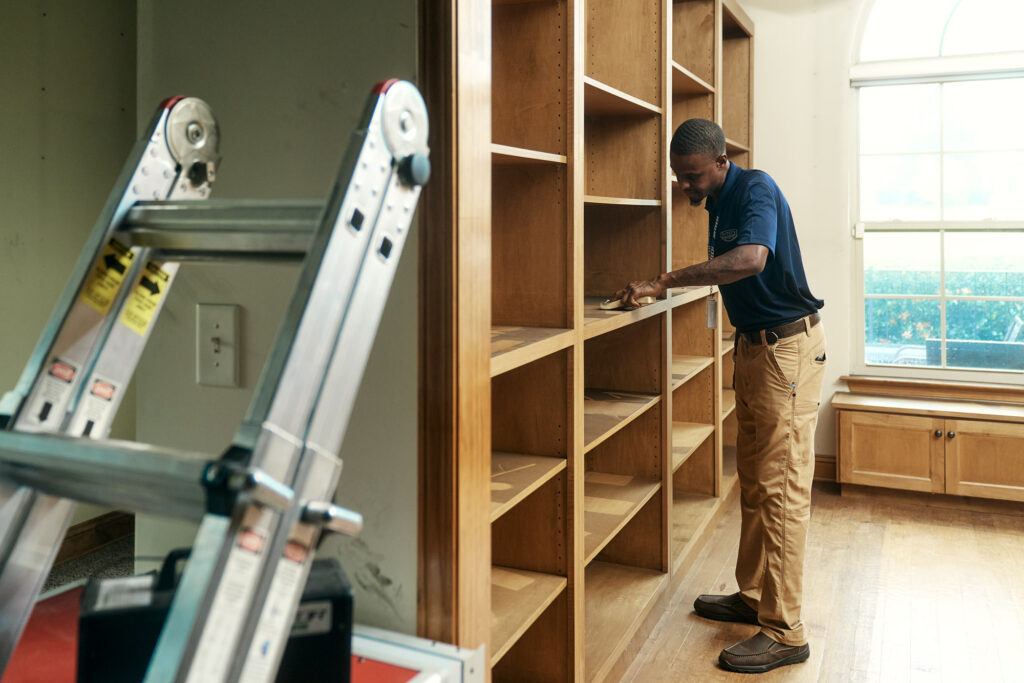
Once the immediate fire emergency has passed, the next step is finding out how far the damage traveled.
Rytech Restoration of Orange County serves homeowners, businesses, property managers, and insurance professionals throughout Anaheim, Irvine, Santa Ana, Huntington Beach, Garden Grove, Fullerton, Orange, Costa Mesa, Mission Viejo, Westminster, and surrounding Orange County communities.
If your home, rental property, commercial facility, or insured property has been affected by fire, smoke, soot, odor, sprinkler discharge, firefighting water, or related moisture damage, call Rytech Restoration of Orange County at (949) 416-3131. The local team provides 24/7 assistance and can help you understand what needs to happen next.
GET INSPECTED TO STAY PROTECTED.
FAQs: Answering Your Pressing Fire Damage Repair Questions
At Rytech Restoration of Orange County, we know that fire damage can be overwhelming. To help you through this difficult time, we’ve created a list of FAQs to give you a better understanding of our services, the restoration process, and what to expect when you choose to work with us.


